
CTRL|Device
Most digital systems establish the right to participate through identity.CTRL|Device introduces an architecture in which authority, eligibility and trust are established before participation is authorised.The examples below illustrate how participation may be evaluated according to context, environment and operational conditions, and governed throughout progression.This Places:
Eligibility before identity.Participation may first be qualified according to context, authority and operational conditions before identity becomes necessary.


Child & Online Safety Begins With The Device
CTRL|Device emerged from a broader investigation into zero-knowledge systems, contextual intelligence and device-level participation.Child and online safety subsequently emerged as one particularly significant application. Most current approaches ask:""Who is this person?"
CTRL|Device asks:
"Should participation be authorised?"




Digital Support Begins With The Device
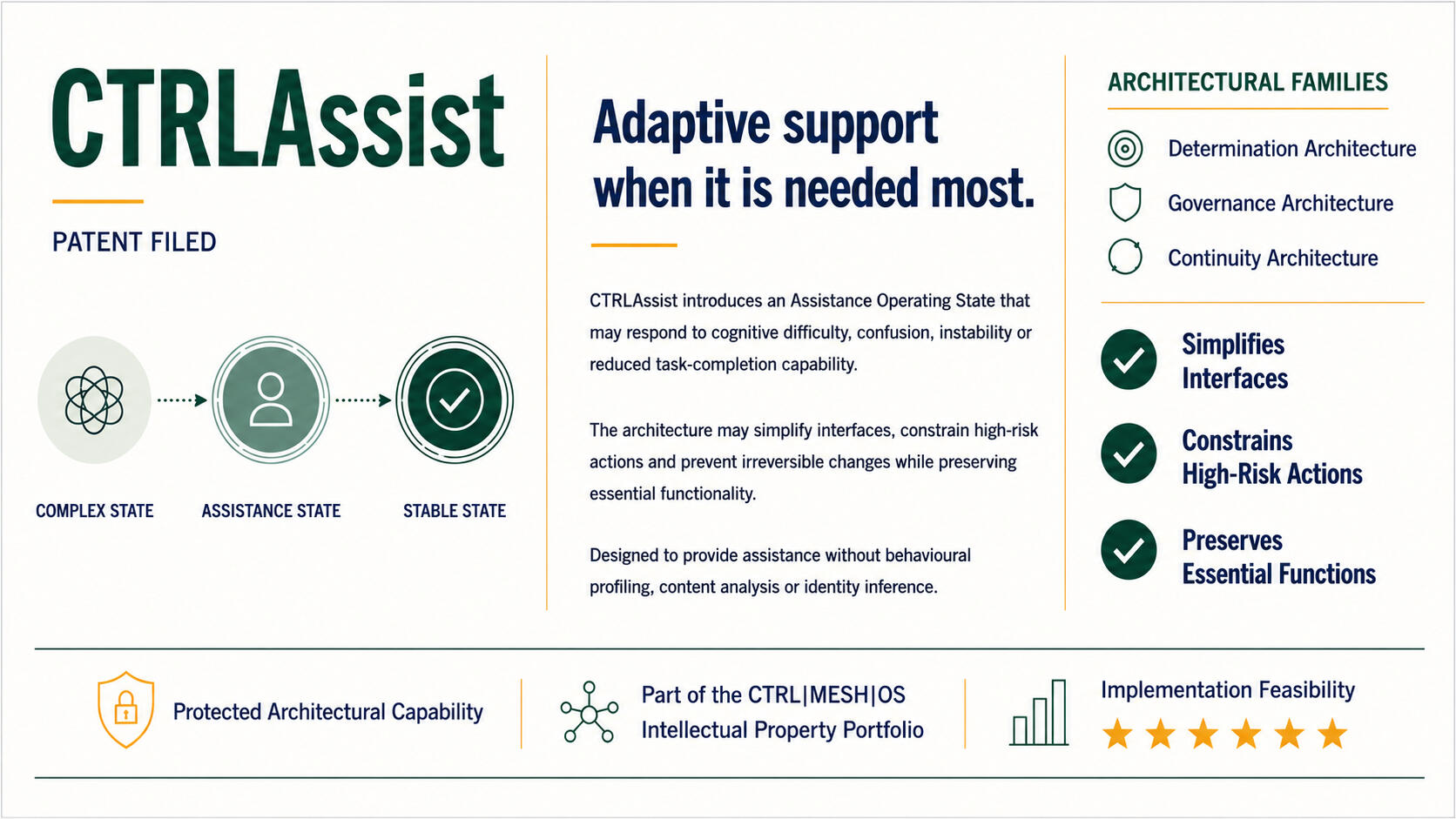
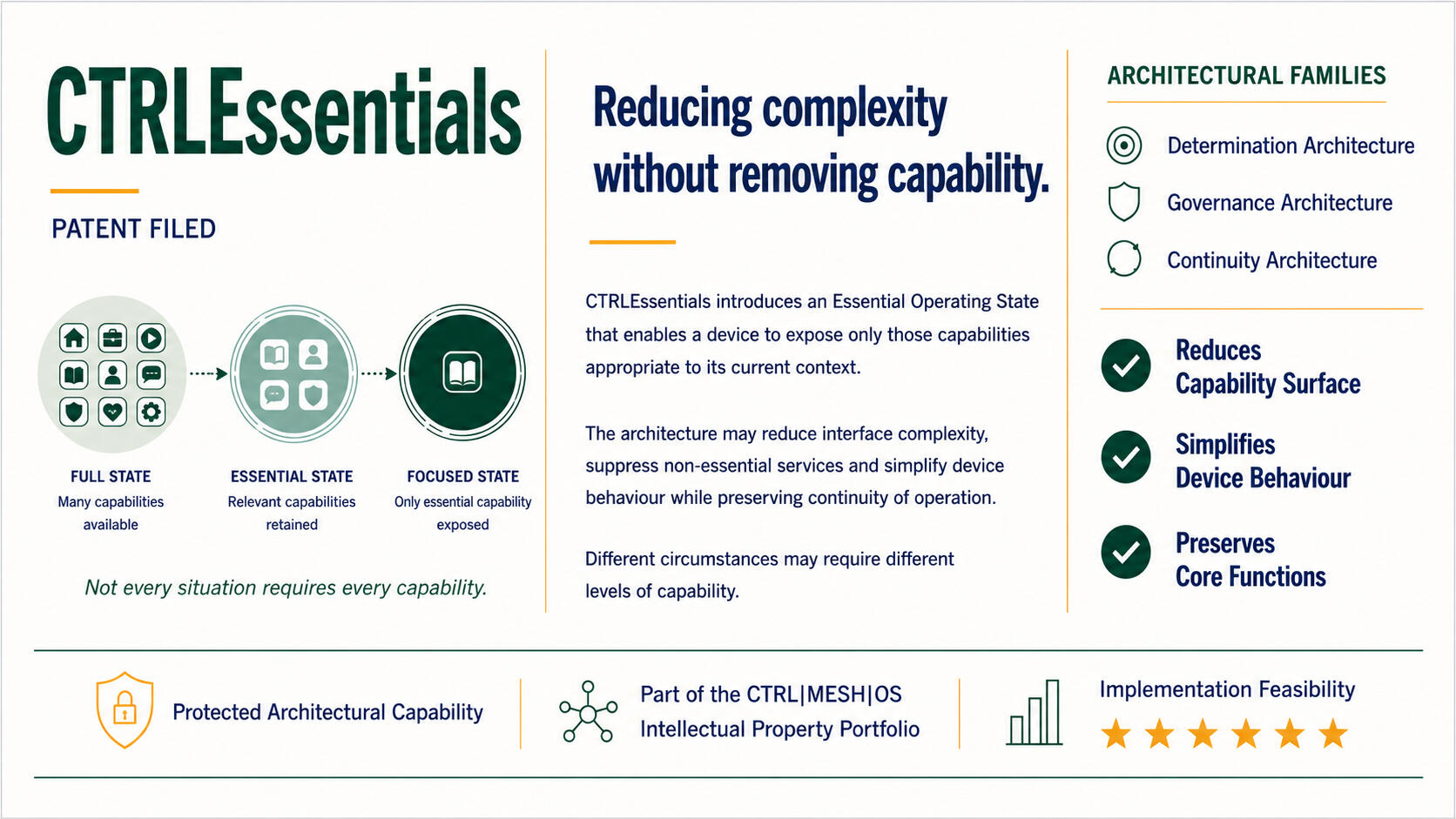
CTRLAssist emerged from a broader investigation into zero-knowledge systems, contextual intelligence and device-level participation.The original question was not how to provide assistance, but whether devices could recognise and respond appropriately to changing operational conditions without relying upon behavioural profiling, content analysis or identity inference.Most digital support systems react after difficulty has already become apparent.This raises a more fundamental question:
Should support begin when a user asks for help, or should it begin when the device
recognises that assistance may be beneficial?
CTRLAssist explores whether devices could establish context-appropriate support states before errors,
confusion or irreversible actions occur.


Environmental Eligibility Begins With The Device
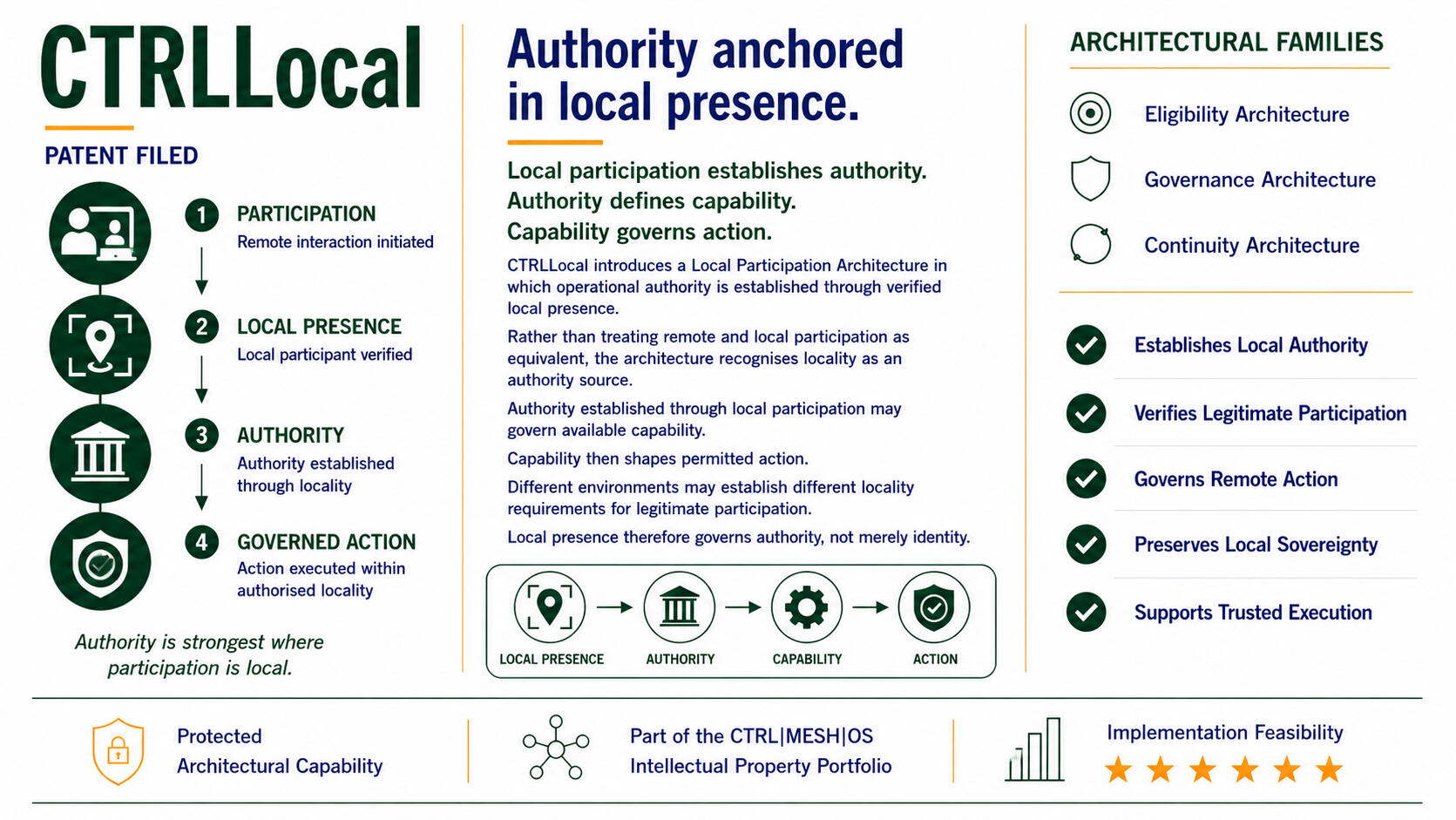
CTRLLocal emerged from a broader investigation into governance architectures, contextual intelligence and device-level participation.Most digital security systems focus on identity, authentication and access control.These controls remain important. However, they often operate without considering whether a device is participating within an appropriate and trusted environment.
This raises a more fundamental question:Should digital security be determined solely by who is participating,
or also by where participation is occurring?
CTRLLocal explores whether devices could establish context-appropriate authority, capability and operational trust based upon local presence and environmental conditions before access, communication or high-impact actions occur.


Architectural classifications reflect the CHRNOS architectural framework.
For further information regarding architectural domains, implementation frameworks and associated intellectual property, please visit CHRNOS.com.


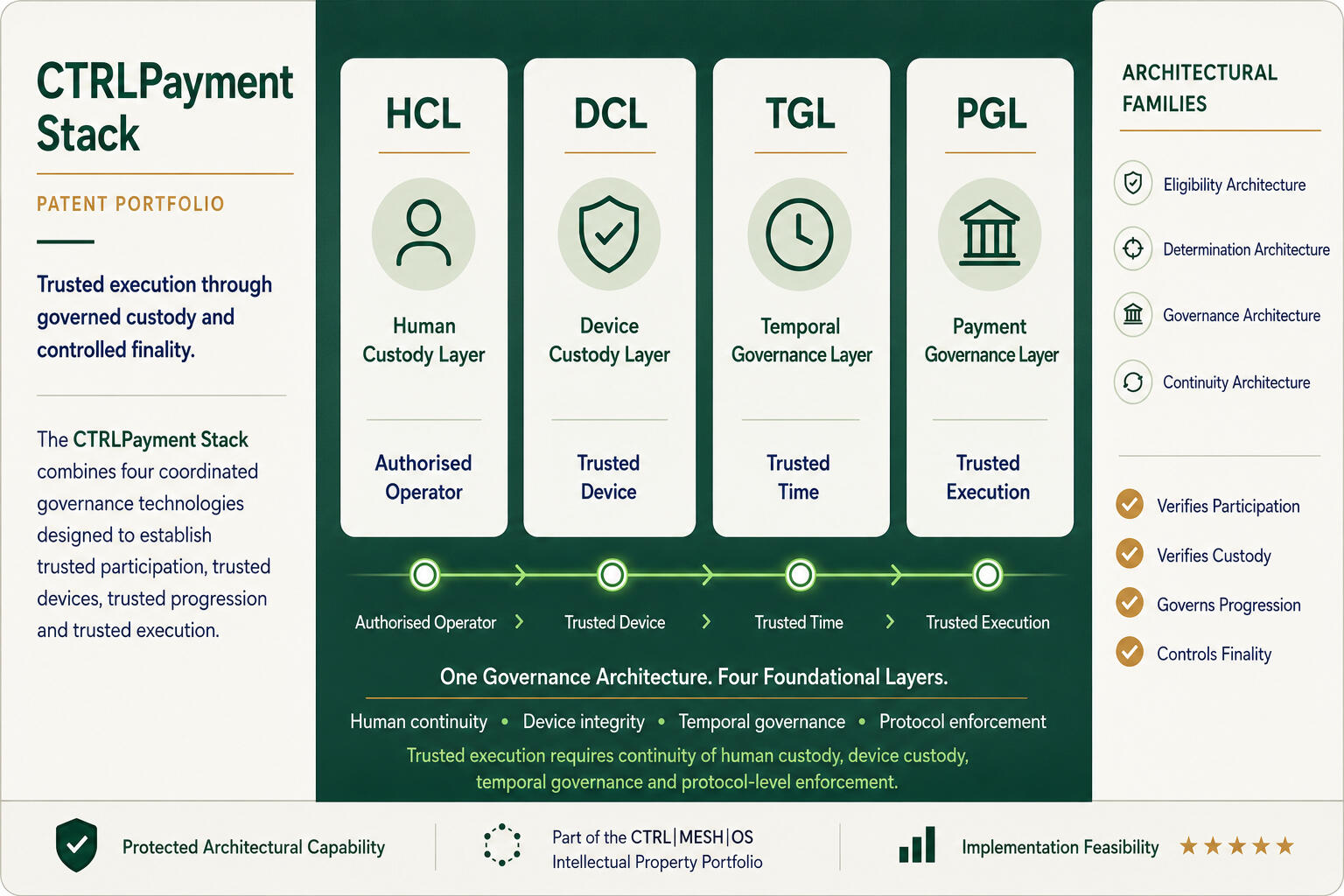
Payment Security Begins With The Device
CTRLPayment emerged from a broader investigation into governance architectures, trusted execution and device-level participation.Most payment systems focus on authenticating users and securing transactions. These controls remain important. However, they often operate prior to and during a payment process.This raises a more fundamental question:
Should payment security end at the point of transaction, or should
payment capability remain more continuously governed ?
CTRLPayment explores whether devices could establish context-appropriate payment capability, operational state and trust conditions before, during and after financial interactions take place.


Zero-Knowledge Begins With The Device
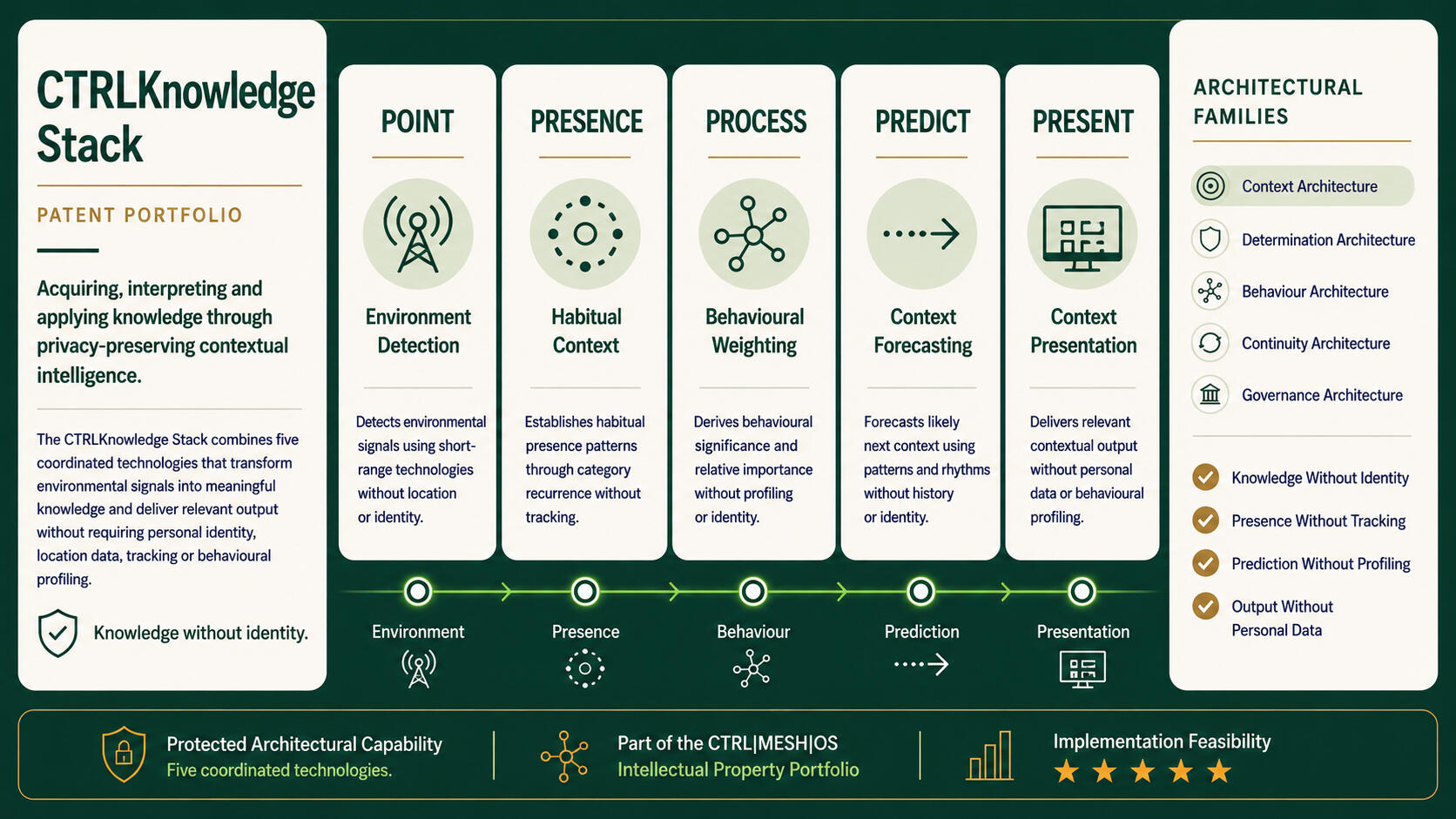
The CTRLKnowledge Stack emerged from a broader investigation into zero-knowledge systems, contextual intelligence and contextual participation.The objective was to explore whether useful knowledge, prediction and support could be derived without persistent identity, behavioural profiling or personal-data accumulation.This raises a more fundamental question:
Should useful and sufficient knowledge require identity,
or can it be derived from context alone?
The CTRLKnowledge Stack explores whether devices could derive useful knowledge from participation, context and environment rather than
identity, behavioural history or personal-data accumulation.
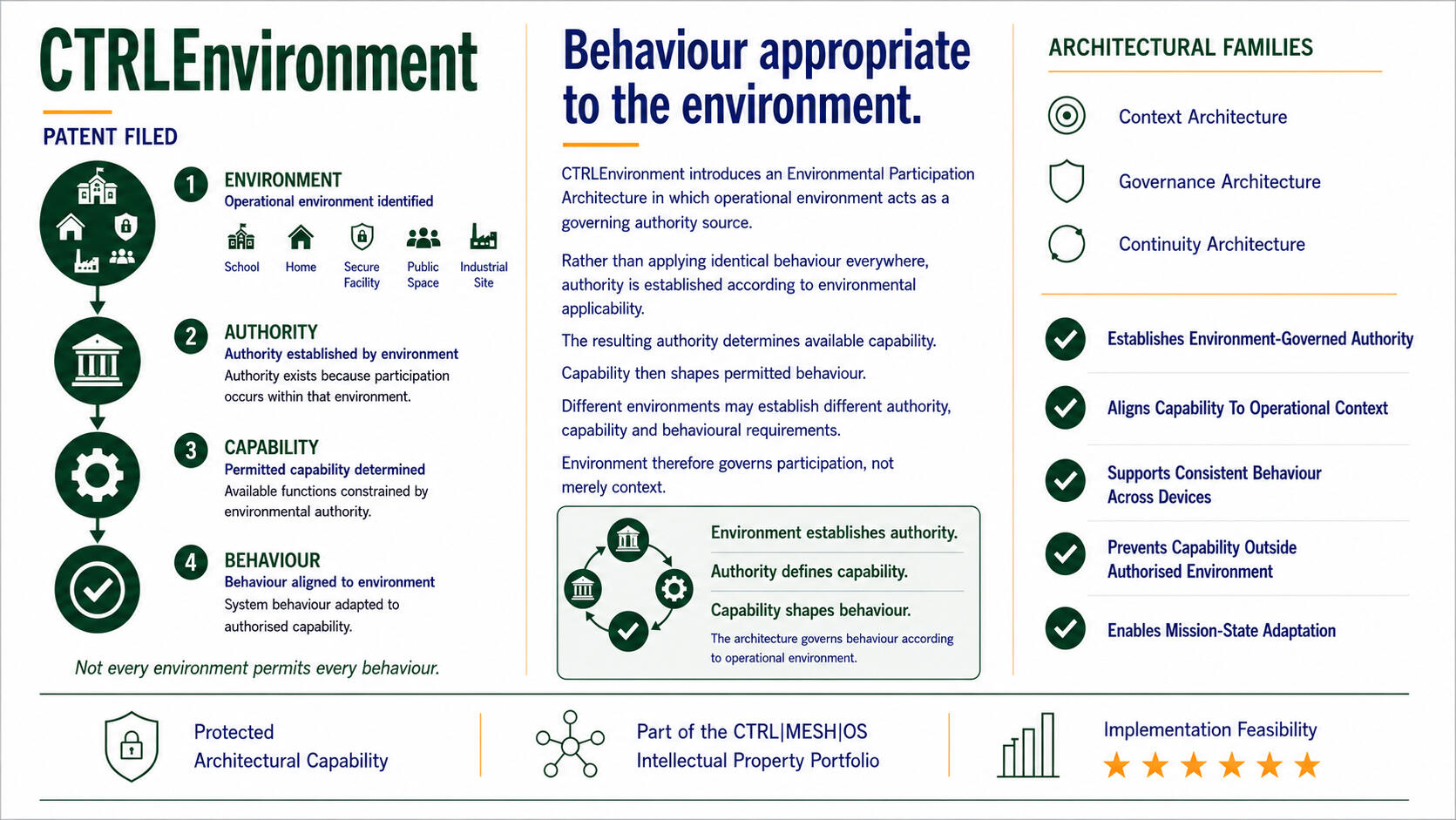
Across these capabilities, a consistent control model emerges:Interaction occurs within an environment.
Environment establishes authority.
Authority defines capability.
Capability shapes behaviour.Not every environment permits every behaviour.
Behaviour should not be defined separately by each platform.
Devices can instead establish a context-aware behavioural state that applies consistently across all content surfaces — including mobile, desktop, tablet and TV environments.Participation is therefore qualified before interaction occurs, rather than leaving each application to act as the primary line of defence.
Discuss CTRL|Device:

Optima365 LTD Registered in England & Wales No. 16944407 Stonebank Ayside Grange-over- Sands Cumbria UK LA11 6HY